Context disappears
Teams re-explain the same business reality when a model, thread, or tool changes.
The enterprise intelligence layer
Organize AI interactions as reusable organizational intelligence with privacy, governance, and customer control.
The compounding problem
Without a shared intelligence structure, AI adoption can lead to fragmented context, repeated work, and unmanaged cost.
Teams re-explain the same business reality when a model, thread, or tool changes.
Useful analysis, decisions, and reasoning stay trapped inside individual conversations.
Policies, project history, and expertise live across disconnected systems and people.
More tools and more prompts create activity without building accumulated intelligence.
AI without structure scales cost.
AI with structure scales intelligence.
The Context Engine
Cognitive Core organizes company knowledge, team activity, and current priorities. Useful context can accumulate across work.
Long-term
Policies, documentation, standards, procedures, and enduring institutional knowledge.
Mid-term
Initiatives, teams, departments, evolving decisions, and shared working context.
Short-term
Conversations, decisions, immediate tasks, and the context required for the next action.
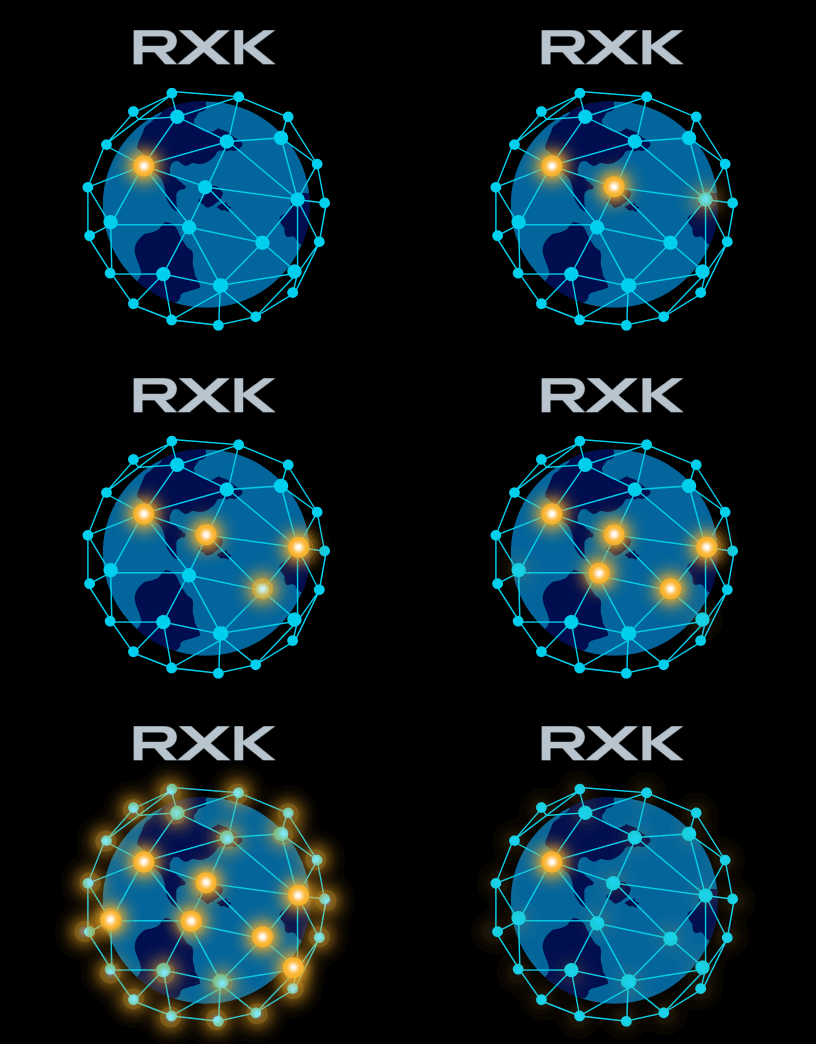
From interaction to intelligence
Governed exchanges can add useful organizational context.
How it works
Cognitive Core sits between people, knowledge, agents, and execution. Requests receive relevant context and appropriate controls.
Finds and assembles relevant organizational knowledge.
Interprets intent, memory, policy, and purpose.
Routes work to governed, role-specific intelligence.
Authorizes actions and maintains traceability.
The architecture supports a direction spanning local GPU, private cloud, hybrid cloud, and distributed multi-GPU environments.
Specialized agent framework
Each agent is configured with a defined purpose, authorized context, permitted capabilities, human controls, ownership, and audit history.
Defines the agent's role, responsibilities, boundaries, and intended outcomes.
Controls which organizational knowledge, memory, and sources the agent can use.
Specifies the tools, workflows, and actions available within its approved scope.
Applies permissions, approvals, escalation paths, and consequential-action limits.
Records ownership, versions, activity, decisions, and audit history.
Operational capabilities
Maintain relevant knowledge across models, teams, and workflows.
Bring pertinent information into decisions and active work.
Manage access, actions, approvals, and traceability by design.
Configure agents for defined organizational workflows.
Security & governance
Organizational controls define who can access information, what agents can do, and how decisions are traced.
Connect identity to enterprise access.
Authorize context and capabilities by role.
Keep consequential actions under human control.
Maintain a durable record of activity.
Review the sources behind generated outputs.
Enforce boundaries across agents and teams.
The vision
Cognitive Core is developing toward a governed foundation for enterprise intelligence. Its direction connects execution with reusable decision context.
Kickstarter campaign coming soon
Follow the Launch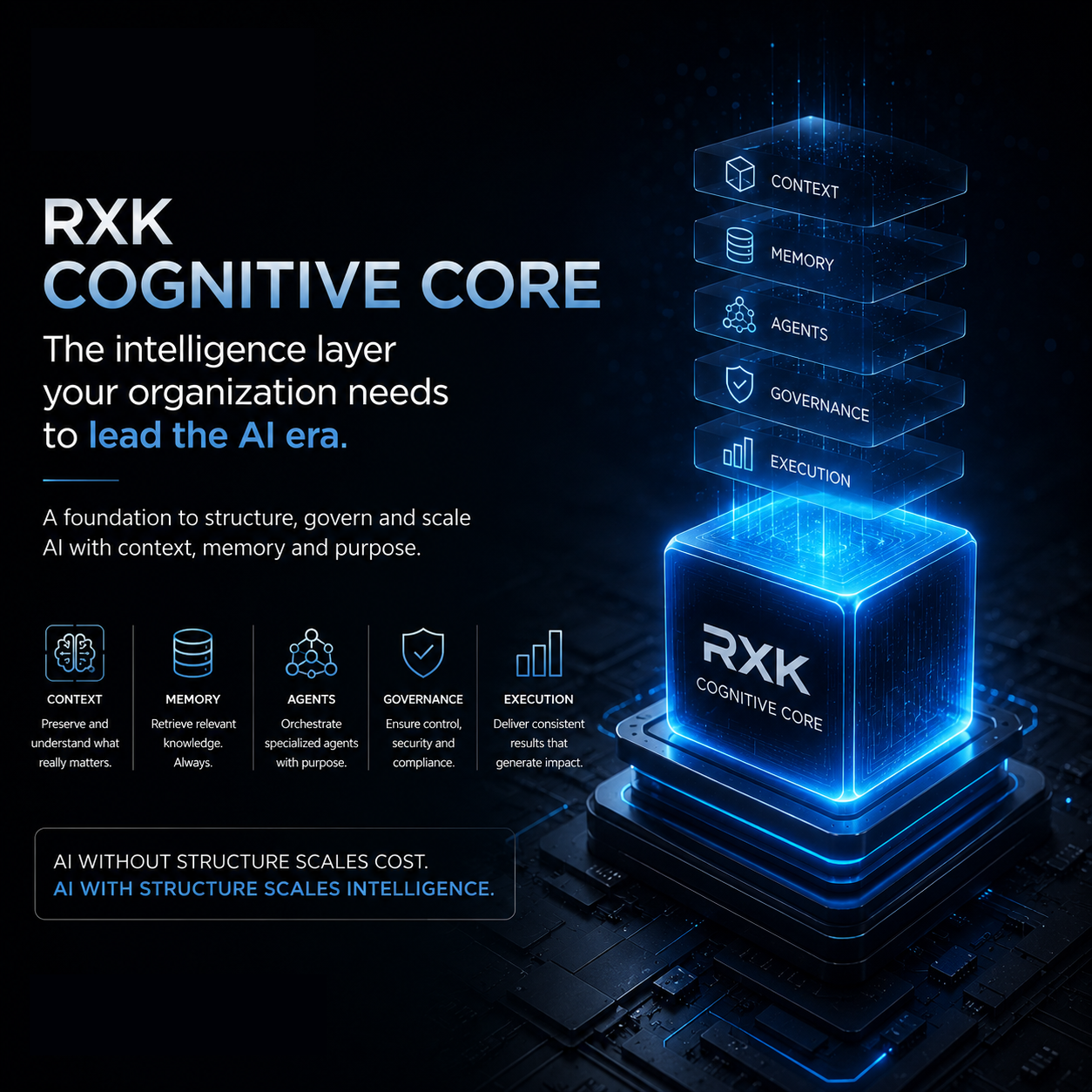
Corporate authentication + local LLM
Vector search + knowledge ingestion
Specialized governed agents
Expanded controls and workflows
Distributed intelligence direction
Transforming ideas into viability.
About RXK Ecosystem
RXK Ecosystem is a product technology company developing private, governed AI infrastructure. Cognitive Core is designed to connect organizational memory, specialized agents, governance, and execution in one controlled platform.
Early access
Register your organization for Cognitive Core early access.
Request confirmed
Thank you. The RXK team will contact you with the next steps.